

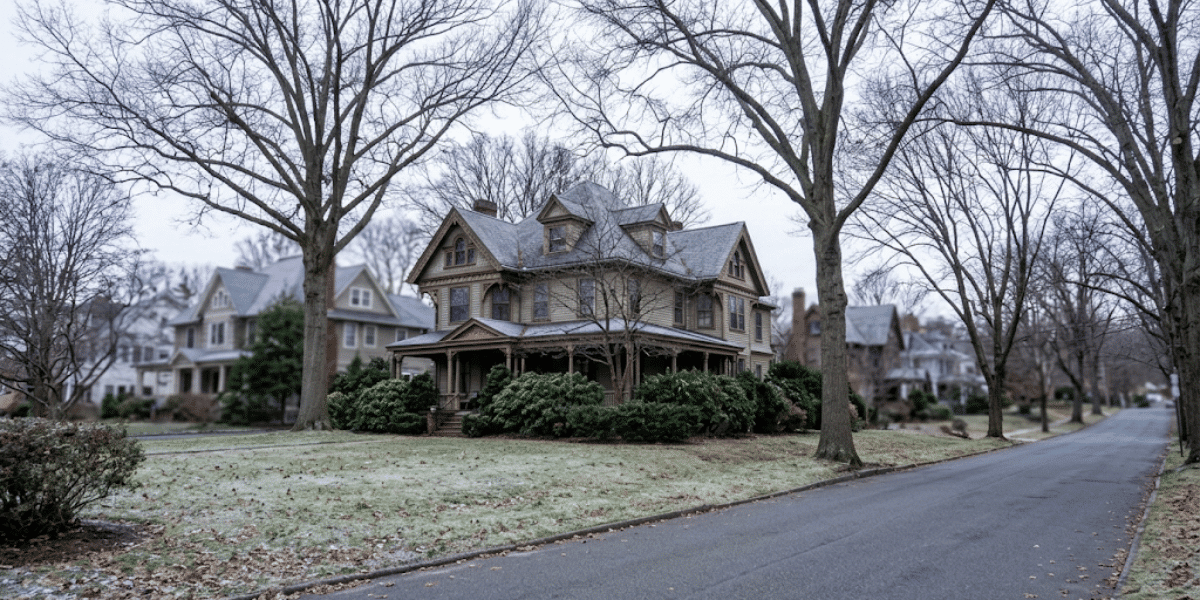
Homeowners in Montclair, West Orange, Verona, and Cedar Grove tend to have mature canopy trees and older foundation plantings. For each of them, winter tree care in NJ looks different. Browning boxwood and holly, vertical cracks in trunks, and limbs broken by snow and ice are the problems that generally show up the most once the weather gets warmer.
By then, it’s too late to prevent damage. Effective protection happens in the weeks before the ground freezes, and the right step depends on the type and age of the tree.
Key Takeaways
- Keep watering evergreens through fall, especially in dry weeks, until the ground freezes, because most spring browning on broadleaf evergreens is winter burn, though road salt can look the same.
- A vertical split in a trunk is often blamed on frost, but drought stress is frequently the real cause, and any open wound raises the risk of decay.
- Newly planted trees need steady water in dry weather and no more than 3 inches of mulch, and trunk wrap is usually not recommended.
- Multi-stem trees and upright evergreens break most easily under heavy snow and ice.
- Spotted lanternfly adults die in winter, but their egg masses survive and hatch in late April or early May.
What Does Winter Do to Trees and Landscaping in New Jersey?
In New Jersey, winter stresses landscapes and trees in a few ways. Each one calls for its own response:
- Evergreens dry out because frozen soil keeps their roots from replacing the water their foliage loses.
- Road salt scorches plants near streets, driveways, and walks.
- Trunks crack or scald when temperatures swing.
- Heavy snow and ice break weak branches.
- Pests ride out the cold as eggs and hatch in spring.
Older neighborhoods throughout Essex County tend to face all five at the same time.
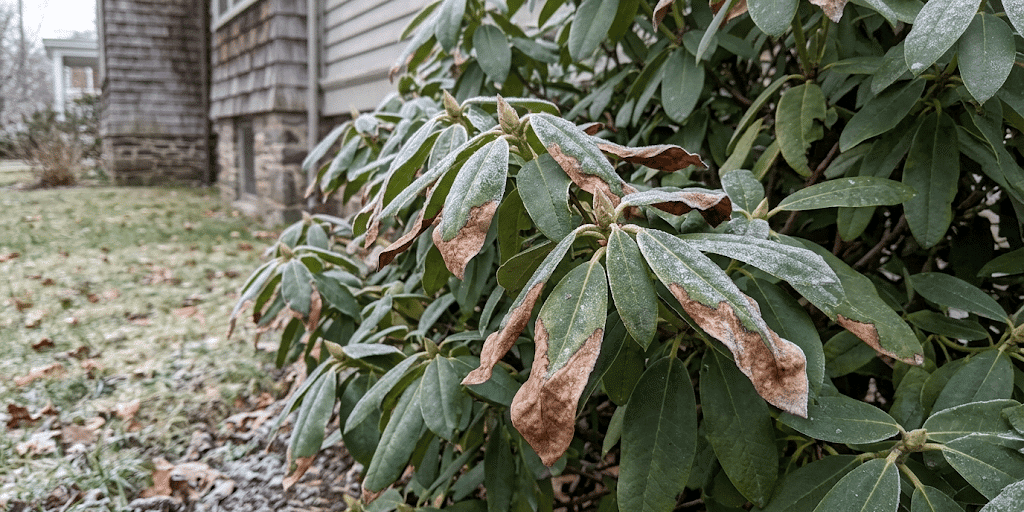
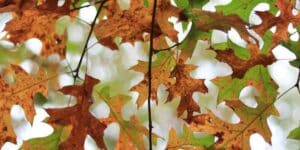
Browning leaves on broadleaf evergreens are a common sign of winter burn, and prevention starts in fall.
How Do You Protect Broadleaf Evergreens in Winter?
Broadleaf evergreens (e.g., boxwood, holly, and rhododendron) should be well-watered until the ground freezes and then shielded from the sun and wind. For an extra tool, you can treat with an anti-desiccant spray. More likely than not, these are the plants that’ll look brown come spring time.
Why Broadleaf Evergreens Turn Brown in Winter
If your tree has browning that starts at the foliage tips and works inward, it’s because of winter burn. It happens when frozen soil keeps roots from replacing the water that winter sun and wind pull from the foliage, and a dry autumn makes it worse. Shallow-rooted plants (e.g., azalea and mountain laurel) are the most affected, especially on open, windy sites or beside reflective walls and pavement. Conifers like spruce, yew, arborvitae, and juniper can suffer too, but the damage may not be visible until May.
Winter Burn or Road Salt Damage
Road salt damage can look very similar to winter burn, which is why you should check which side of the plant is affected. Salt scorch, early leaf drop, and twig dieback concentrate on the side facing the road, and evergreens are more vulnerable since they hold their needles for years and accumulate salt. It’s riskiest to apply salt in late winter, since there’s less time for snow and rain to flush it out before spring growth.
Damage on the sunny, windswept side indicates winter burn instead. Either way, you should treat what you see as a clue, rather than a diagnosis. To learn more, check out our guide to avoiding winter salt damage if salt’s a possibility on your property.
Possible Protection Options
Watering aside, there are a couple more steps that can be beneficial, such as:
- Plant away from drying winds.
- Use a burlap barrier with the top left open, and remove it promptly in spring.
Anti-desiccant sprays can be a helpful tool, too, since they reduce winter moisture loss by up to 20%, although they don’t prevent winter burn on their own. They’re most effective when the air is above freezing but the soil’s still frozen, and used alongside fall watering and mulch. Some products can injure scale-leaf evergreens, so check the label for your plant before spraying. We explain how anti-desiccant treatment works in a blog post for a more in-depth look.
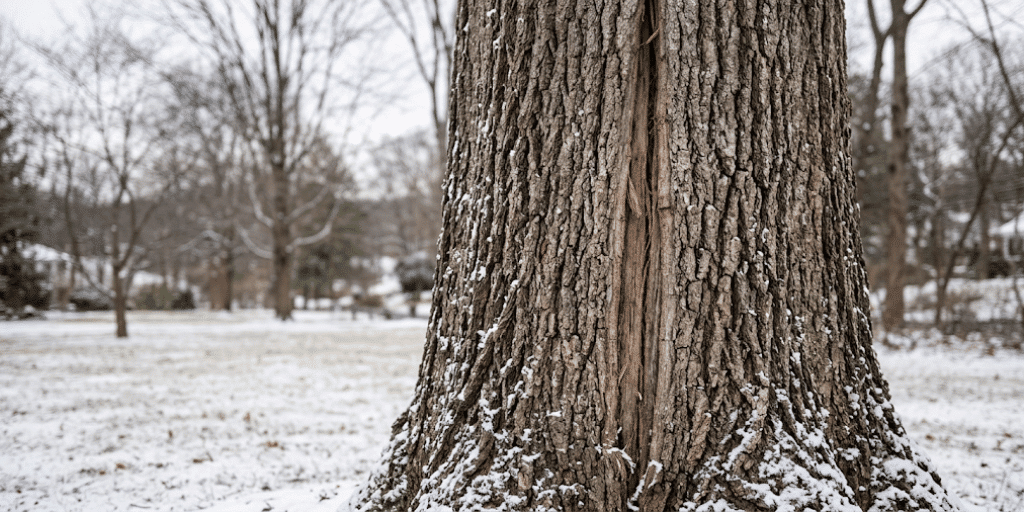
A vertical crack in the bark is a winter symptom worth having an arborist take a look at.
Do Deciduous Trees Need Winter Protection?
Deciduous trees need less winter protection than evergreens, but frost cracks and sunscald are worth looking for on them. A frost crack is a vertical split in the trunk, and sunscald is a similar-looking wound on the south or southwest side. Often, splits in the bark are blamed on frost, but drought stress is frequently the actual cause. Frost cracks tend to reopen over the years, and sunscald wounds usually never seal, which increases the risk of decay fungi and wood-boring insects.
Regardless, a wide or deep crack, or any crack on a large tree, should be assessed by an ISA Certified Arborist. For more information about frost cracks in trees, check out our blog post.
How Do You Protect Newly Planted Trees in Winter?
In winter, newly planted trees need steady water, a thin layer of mulch, and a clear path for trunk protection. Their roots haven’t spread far yet, so a dry fall or hard freeze hits them much harder than they would an established tree. Drought stress in the first year or so after planting is also a common cause of bark cracking.
Water and Mulch
For a young tree heading into winter, water and mulch do the most for it. That said, both are easy to get wrong in opposite ways. A dry fall can leave roots short of moisture, while too much mulch can lead to its own problems. Two habits help maintain balance:
- Water regularly through fall in dry weather until the ground freezes.
- Spread no more than 3 inches of mulch over the roots (2 inches on compacted or poorly drained soil) and keep it 3 to 5 inches from a young trunk.
Fresh mulch should be applied in late fall or winter. Mounded mulch gives voles cover to chew the bark.
Why You Shouldn’t Wrap Young Tree Trunks
Generally, wrapping the trunks of young trees after transplanting isn’t recommended, since replicated studies have found that wraps don’t prevent sunscald or frost cracks. In fact, wraps can reduce photosynthesis and invite borers and disease. An exception, though, would be chewing rodents, where a wrap can help if it stays on only during the dormant season.

Plowed snow and road salt can injure the plants and trees that sit along the edge of a driveway or street.
How Do You Protect Trees From Snow and Ice Damage?
Heavy snow and ice don’t damage all trees the same way, so the first step is knowing which of yours break most easily. Structure is a major factor, and a quick look before winter can tell you where the weak points are.
The Trees That Break First
Multi-stem trees, upright evergreens, and trees with included bark are the most susceptible to breaking under snow and ice damage. Included bark forms where two stems pinch together at a narrow angle, leaving a weaker joint than a wide, well-attached branch. If any of these trees are near your house, driveway, or power lines, take note of them, since they can cause the most trouble when limbs come down.
What to Do (and Avoid) After Heavy Snow or Ice
Once the snow and ice really start piling up, your next moves can either limit the damage or add to it. Practice a couple helpful habits, like:
- Do not throw heavy, wet snow onto small trees or shrubs when you clear driveways or roofs.
- Leave large hanging or split limbs to an arborist.
Where you pile your snow matters, since the piles can also injure trees. We cover snowbank damage in its own post for more detail. For trees already coated in ice, our guide to ice-covered trees and what to do and not do can be a helpful resource.
What Pests Should You Watch For on Trees in Winter?
Some pests overwinter as eggs and hatch when spring shows up, so winter’s a good time to closely check trunks and branches. Cold by itself doesn’t do much to wipe out insect populations, and snow cover can even improve their survival, so you shouldn’t count on a hard winter as a dependable solution.
Pests That Overwinter as Eggs
In New Jersey, the best example is the spotted lanternfly. Adults can’t survive the winter, but egg masses hatch in late April or early May, each holding 30 to 50 eggs. These masses look like a smudge of mud and can be found basically anywhere outside, so check fences, stones, and outdoor furniture. If you find some, scrape them away before they hatch. For more about other insects that survive winter in New Jersey, read our post.
The Role of Tree Health Care From Alpine
Our tree health care service is the right next step when the same plant shows winter stress year after year, since repeat damage points to a bigger issue with the tree’s overall health. Not sure what you’re looking at? Learn more about the program, or have an arborist take a look.
Frequently Asked Questions About Winter Tree Care
Is winter a good time to prune trees?
Spring-flowering trees are generally pruned after they bloom, while oaks are best pruned from December through February, and elms are pruned in winter to lower the risk of Dutch elm disease.
Will evergreens recover from winter burn?
Often, yes. Many plants outgrow everything except for the worst damage, though conifers with damaged tissue can look normal at first and then brown suddenly once spring moisture stress begins. Wait for new growth to show how far the damage goes before removing dead branches, and avoid shearing, which removes the newest buds.
Can deer damage trees in winter?
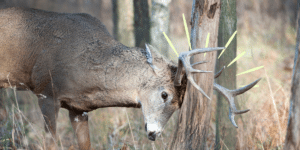
Yes. Most deer browse damage happens from the ground up to about 6 feet, and bucks rub bark off trunks up to about 3 feet high each fall. Netting or wire caging can protect individual young trees from deer.
How can I use less salt around my trees?
Shovel early, before snow freezes to ice, so you need less salt. A coffee cup of road salt can cover up to 20 feet of driveway, and most people use more than they need. Salt stops working once pavement drops below 15 degrees F, so switch to sand for traction in deep cold; planting a buffer of salt-tolerant plants between paved areas and your yard also helps.
Should I plant evergreens in the fall?
Fall can be a good time to plant trees and shrubs, because cooler temperatures and fall rain direct energy into root growth. Evergreens need more thought, since a new one is more exposed to winter burn. If it is already November, ask an arborist whether your species should go in now or wait until spring.

A walk-through before the ground freezes helps match the right winter protection to each tree’s type and age.
Alpine Tree: Your Go-To for Winter Tree Care in NJ
Winter damage is much easier to prevent before the ground freezes, so stroll around your yard now and note any dry evergreens, unmulched young trees, or cracked and crowded limbs. If you’re unsure about something, get a professional opinion.
At Alpine Tree, we’re TCIA-accredited, and our ISA Certified Arborists are happy to take a look. Request an appointment today to have your trees assessed before winter comes. We serve Montclair, West Orange, Verona, Cedar Grove, and the surrounding Essex County communities.
Table of Contents
Add a header to begin generating the table of contents


