

Across Morris and Somerset counties, leaves are down, and the temperatures are dropping, exactly when scale insects and hemlock woolly adelgid settle into mature ornamental plantings for the winter. If you haven’t scheduled fall tree pest treatment in NJ yet this year, those pests spend the next several months feeding and multiplying out of sight.
If left untreated, they return in spring in larger numbers than when they started. Temperature, not the calendar, closes the treatment window, so pests that survive a New Jersey winter still have time to be treated before the window shuts for good.
Key Takeaways
- Fall tree pest treatment in NJ generally stays effective until temperatures drop consistently below 40°F.
- Dormant oil and hemlock woolly adelgid treatments work because pests are at their weakest right before winter, not because of a fixed calendar date.
- Hemlock woolly adelgid has two effective windows: September through early November, and a February or March dormant-rate spray.
- Waiting until spring means overwintering eggs and adelgid populations get a full season’s head start before treatment reaches them.
- A Plant Health Care program tracks these windows for you, so you don’t have to remember dormant oil, pest-specific treatments, and fertilization timing separately every year.
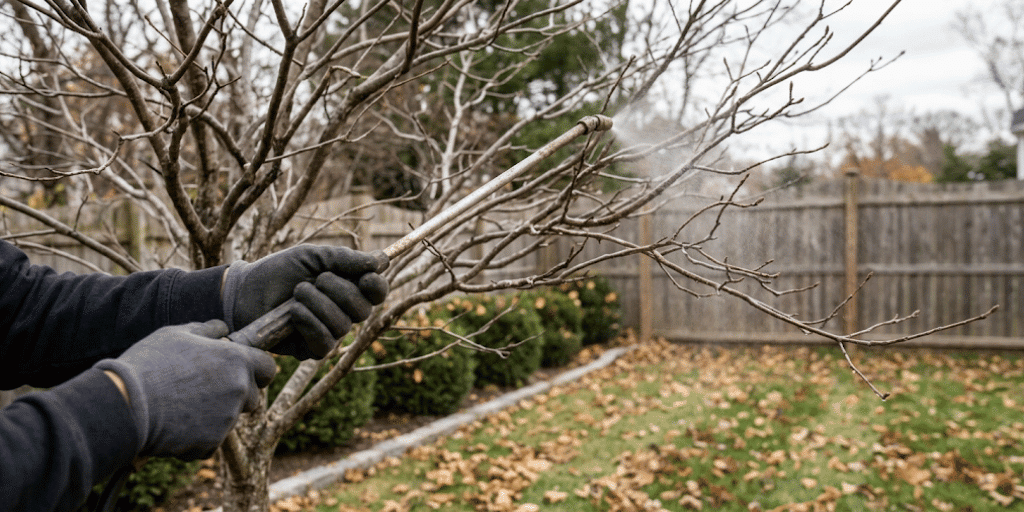
The treatment window is set by air temperature, and it stays open until readings drop below 40°F and stay there.
Is It Too Late to Treat My Trees for Pests Before Winter?
No. In New Jersey, most fall tree pest treatments work well into November because guidance for these applications is based on air temperature. Generally, treatment is still viable as long as temperatures stay above the minimum threshold for horticultural oil applications, 40°F. Once the temperatures drop below that and stay there, the window closes for the season.
With so many mature ornamental plantings on properties around Florham Park and Morris Township, it’s especially important to be aware of this timeline. Scale insects and hemlock woolly adelgid can spread across a specimen tree or hedge line for an entire season before anyone notices. Because the treatment window runs later than most people assume, you usually still have time to treat before spring. For another look at how timing works across pests, our guide to pest treatment timing is a great resource.
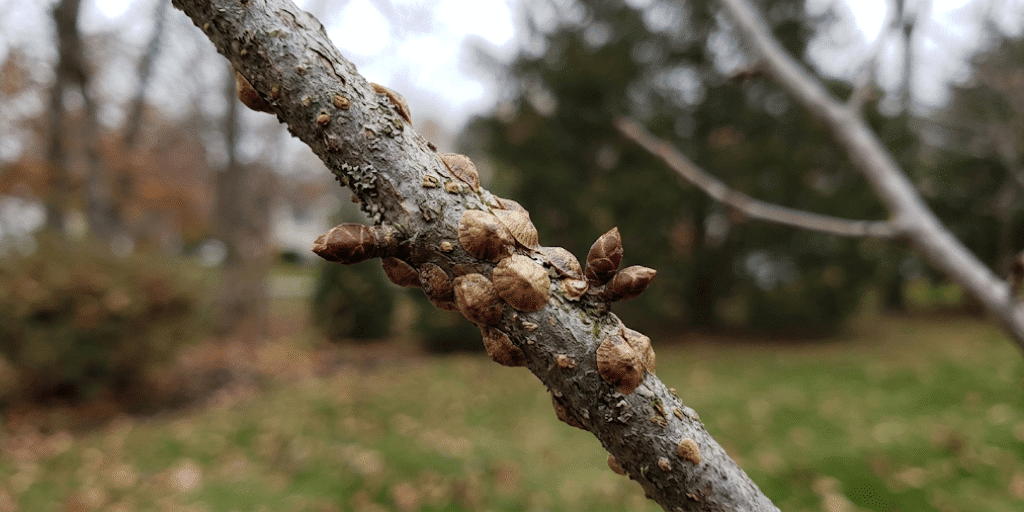
Scale insects look like small bumps on bark, which is why they often go unnoticed until spring.
Why Is Fall Treatment Effective?
Treating pests in the fall is effective because they’re at their most vulnerable stage right before winter, before eggs and nymphs develop the protective coatings that make them more difficult to treat later on.
Dormant Oil and Scale Insects
Dormant oil is an important tool for managing many overwintering scale insects, and its effectiveness comes down to timing:
- Applied at 2 to 4 percent rates (when permitted by the product label and appropriate for the plant) in late fall or late winter, dormant oil controls overwintering insects and their eggs.
- A late-fall application followed by a late-winter/early-spring application can provide another opportunity to suppress surviving overwintering pests, although treatment programs should be based on the pest and product label.
If temperatures are still above 40°F and you haven’t applied dormant oil yet, you still have time. We break down identifying and treating scale insects, so you know what to look for.
Hemlock Woolly Adelgid
Understanding hemlock woolly adelgid treatment and what the damage looks like matters. There are two effective treatment windows for hemlock woolly adelgid:
- September Through Early November : The nymphs stay exposed until wax starts forming around October, and move the soap/oil window to late August to September. By October, systemic soil drenches also work well, since hemlocks are still taking up water and have time to move the treatment through the tree before spring. New Jersey restricts neonicotinoid pesticides, the active ingredient in many systemic HWA treatments, to licensed applicators.
- February or March : A dormant-rate spray is also an option.
Every property has a different pest mix, so it’s worth having a professional confirm which window and method best suit your trees. If you wait until spring, you won’t ruin your trees, but you will lose the head start fall treatment provides. Spring treatment can still be effective, and in some cases late-winter or early-spring dormant oil may provide better results or plant safety. The right timing depends on the pest, plant, weather, and product.
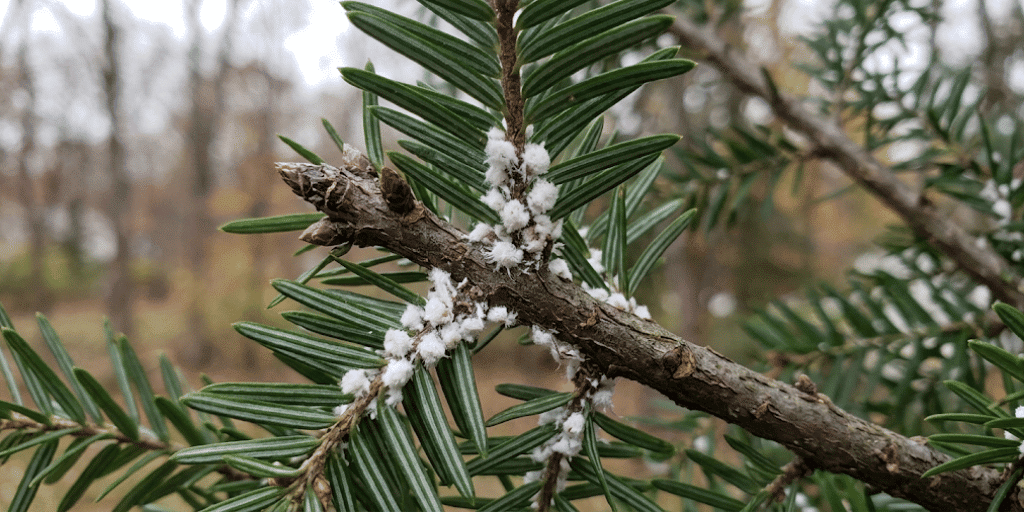
Cottony white masses under hemlock branches are the classic sign of hemlock woolly adelgid.
How Do You Stay Ahead of Tree Pests in NJ?
A plant health care program is the most reliable way to stay ahead of pests because it maps dormant oil, pest-specific treatments, and fertilization across the year, so you don’t have to track each one separately. Knowing when to fertilize trees and shrubs is important for homeowners across New Jersey.
Frequently Asked Questions About Fall Tree Pest Treatment
What signs of pest damage should I look for on my trees this fall?
Look for cottony white masses on the undersides of hemlock branches, which signal hemlock woolly adelgid, and small bump-like clusters on bark or stems, which indicate scale insects. Mature ornamental plantings are especially prone to going unnoticed, so unusual dieback on these trees is worth a closer look.
Can I treat my trees for pests myself?
You can buy dormant oil and apply it yourself, but getting the rate, timing, and coverage right, especially on mature trees, is easy to get wrong. A professional can also confirm which pest you’re actually dealing with and choose the right method, so you’re not guessing.
Will a late-season warm spell reopen the treatment window after a freeze?
Possibly. Since the window is set by temperature rather than the calendar, treatment may still be worth scheduling if conditions warm back up before a hard freeze sets in for good. Check with a professional rather than assuming the season is over.
What happens if I already see pest damage this year?
You should still treat now. A fall application won’t undo visible damage, but it targets the pest before it can build a larger population over winter, limiting how much worse the damage gets next season.
Alpine Tree Can Treat Your Trees for Pests This Fall
Alpine Tree treats dormant-oil-controlled pests and hemlock woolly adelgid throughout the fall season, timed to whatever window applies to your trees. Request an estimate online today, and we’ll take a look at your property and determine what it needs before the window closes this year.
Table of Contents
Add a header to begin generating the table of contents
