
After multiple heat advisories already this summer, many Morris County homeowners are wondering what the prolonged heat means for their trees. The tricky part is that heat damage isn’t always immediate. Trees often don’t show signs of stress until weeks later, when leaves begin to scorch, branches die back, or a summer storm reveals damage that developed during the hottest weeks of the year.
Trees growing near driveways, sidewalks, patios, and other heat-reflecting surfaces are especially vulnerable because those areas trap heat and dry out the soil faster. With forecasters still calling for above-average heat and below-average rainfall across the Atlantic Corridor this summer, understanding the warning signs can help you protect your trees before permanent damage occurs.
Key Takeaways
- Most trees in Morris County grow best between 70 and 85°F, with serious stress beginning above 90°F.
- The effects of heat stress are often delayed, with symptoms appearing long after the hottest weather has ended.
- The single most important thing you can do during a heat wave is deep, slow watering at the drip line, not near the trunk.
- Heat can contribute to trees falling, both through sudden summer branch drop and through cumulative root damage that weakens anchorage over time.
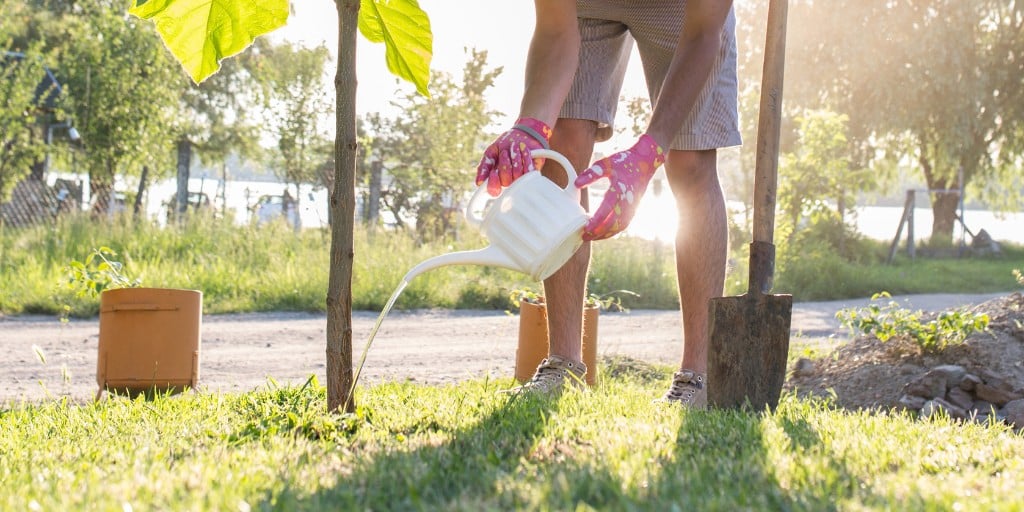
Newly planted trees need about 15 gallons of water twice a week during a heat wave to support their small, shallow root systems.
What Happens to Trees During Heat Stress?
When temperatures exceed what a tree can handle, it doesn’t immediately fail. It goes into survival mode, and every step in that process costs the tree something:
- Above Ground: Trees breathe and release water through tiny pores called stomata, which open to take in carbon dioxide for photosynthesis and release water vapor through transpiration. In sustained heat, the tree closes those stomata to slow water loss. That protects against dehydration, but it also shuts down photosynthesis, which produces the energy the tree needs to grow, defend itself, and store reserves for next spring.
- Below Ground: The fine feeder roots in the upper few inches of soil can die within days during a sustained heat wave. These roots do most of the work of taking up water and nutrients. When they’re gone, the tree’s ability to hydrate gets worse just when it needs water most.
- The Cost: To survive the rest of the season, the tree starts burning stored energy reserves to keep tissues alive. Those reserves were meant for next spring’s leaf-out and root growth. The longer the heat lasts, the deeper the tree digs into reserves it can’t easily replace, which is why the consequences of a hot summer tend to show up the following year as poor growth, dieback, or vulnerability to pests and disease.
What Temperature Is Too Hot for Trees?
Across Morris County, most temperate trees grow best between 70 and 85°F. Then, stress builds in stages from there:
- Around 90°F: Growth slows and the tree starts conserving water.
- Above 94°F: Photosynthesis quickly falls off.
- At 104°F and Above: Visible damage intensifies, typically having irreversible effects.
- Around 115°F: Thermal death threshold for most temperate-zone species.
Morris County’s own hazard mitigation plan specifically acknowledges the urban heat island effect in the county.
How to Spot Heat Stress in Your Trees
Heat-stressed trees show a recognizable set of warning signs, and many of them don’t show up until after the heat wave has passed. Look for:
- Leaf Scorch: Browning along the edges and tips of leaves that gradually spreads inward.
- Persistent Wilting: Leaves that remain wilted into the morning instead of recovering overnight.
- Premature Leaf Drop: Leaves dropping well before fall, especially from the interior of the canopy.
- Sunscald or Bark Cracking: Damage on the south or southwest side of the trunk caused by prolonged sun exposure.
- Premature Fall Color: Leaves changing color weeks before they normally would as a response to stress.
- Crown Dieback: Dead twig tips and thinning in the upper canopy.
Why Homeowners Miss the Damage
Often, the crash shows up later than expected, like late August, September, or the following spring. Your front yard’s tree that looked fine through last July’s heat wave can be in serious decline some time down the line.
Stressed trees generally develop secondary problems, like boring insects and fungal pathogens, which is one more reason to catch the early signs.
How to Save Trees from Heat Stress
The most effective heat stress response is deep watering, mulch, and patience, combined with avoiding the mistakes that usually worsen things.
What to Do
It’s important to do the following:
- Water Deeply and Slowly at the Drip Line: The drip line is the area under the outer edge of the canopy, not the base of the trunk. A good starting point is about 10 gallons per inch of trunk diameter, applied as a slow soak. Early morning is best because evaporation is lowest then.
- Give Young and Newly Planted Trees More Attention: Their root systems are small and shallow, so they need about 15 gallons twice a week during a heat wave. See how to care for a newly planted tree for more information.
- Apply or Refresh Mulch: A 2-to-4-inch layer of organic mulch (wood chips or shredded bark) extending out toward the drip line keeps soil cooler and slows moisture loss. Keep it pulled back about 3 inches from the trunk so the bark doesn’t stay wet against the wood.
- Inspect for Secondary Problems: Stressed trees attract boring insects and fungal pathogens, and catching those early matters. For more on warm-weather care, see our summer tree care tips.
What Not to Do
Knowing what not to do is of equal importance:
- Don’t Prune During the Heat: Opening the canopy exposes bark to sunscald and triggers tender new growth that’s even more vulnerable to the heat.
- Don’t Fertilize a Heat-Stressed Tree: It’s counterintuitive, because when something looks unhealthy the instinct is to feed it, but fertilizer pushes growth a stressed tree can’t support.
- Skip Pesticide Applications in Extreme Heat: Many products cause leaf damage when applied above 80°F.
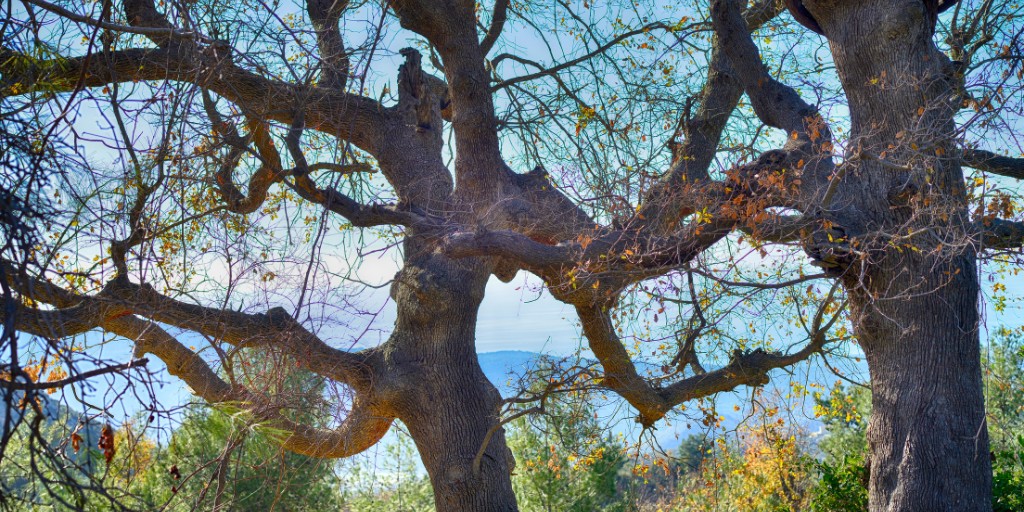
Premature leaf drop and a thinning canopy in midsummer are two of the clearest signs of heat stress in mature oaks.
Can Trees Recover from Heat Stress?
Yes. Most trees can recover from heat stress if the damage is caught early and the tree gets the proper care. Recovery can depend on three things:
- How severe the stress was
- What shape the tree was in to begin with
- How quickly you respond
A mature, well-established oak or maple in good soil typically bounces back from a tough summer without much intervention except for consistent watering. A newly planted tree, a tree with shallow or compacted roots, or one already weakened by pests or prior damage is going to recover much more slowly. Some won’t recover at all without help.
WHY THE TIMING MATTERS: A tree with signs of stress now can recover with consistent care through the rest of summer. A tree that pushes through the heat without obvious symptoms and then declines in September can still be supported through fall and into dormancy, which is when stored energy gets built back up for the next spring. That ongoing support is core tree health management work.
Does Hot Weather Cause Trees to Fall?
Yes, hot weather can contribute to trees falling, through two different mechanisms that operate on different timelines.
Sudden Summer Branch Drop
Summer branch drop (SBD) is when large, apparently healthy branches drop from trees on hot, calm days, usually failing 3 to 12 feet out from the trunk on long horizontal limbs.
It’s been recognized in arboriculture for decades and it’s most associated with oaks, which matters in Morris County because we have a heavy oak canopy. Although the exact cause isn’t fully understood, the leading theories involve heat-driven changes in water pressure inside the branch. SBD typically happens on calm, hot days—not during storms.
Cumulative Decline
This is when heat combined with drought damages the root system, and a weakened root system means weakened anchorage. The tree doesn’t fall during the heat wave itself; it fails weeks or months down the line, when the next strong wind or wet-soil storm hits a tree that’s silently lost root mass over the summer.
That’s partially why stress matters beyond leaf damage; it changes the structural risk profile of the tree. If you have large branches over a roof, driveway, or pool, a tree risk assessment from a Certified Arborist is the right call before the next storm comes.
Frequently Asked Questions About Heat Stress on Trees
How long does it take a tree to recover from heat stress?
Recovery time depends on the severity of the stress and the tree’s overall health going into it. A mature, well-established tree that experienced moderate stress often looks normal by the following spring. A severely stressed tree, or one already weakened by pests or poor soil, can take years of consistent care to fully bounce back.
How much heat can a tree withstand?
Most temperate-zone trees can tolerate short stretches into the upper 90s if they have water available and healthy roots. Sustained heat above 100°F combined with drought is where damage accelerates, and repeated yearly heat stress is more harmful than a single severe event.
Can heat stress kill a tree?
Heat stress rarely kills a tree, especially during a single heat wave for an established tree. However, cumulative damage from multiple hot, dry summers can be fatal—especially for trees already weakened by pests, disease, soil compaction, or prior storm damage. Young and newly planted trees are most vulnerable to a single severe event because their root systems can’t yet reach deeper soil moisture.
Should I use a sprinkler or soaker hose to water during a heat wave?
A soaker hose or slow-running garden hose at the drip line is better than a sprinkler. Sprinklers wet foliage (which can encourage fungal disease) and lose a lot of water to evaporation in the air. A soaker hose delivers water slowly and directly to the root zone, where the tree can actually use it.
Should I fertilize a stressed tree to help it recover?
No, you should not fertilize a tree in summer and not during active stress to help it recover. Fertilizer pushes new growth that a stressed tree is unable to support. Wait until next spring to fertilize, and only do so if a soil test or arborist evaluation confirms a nutrient deficiency.
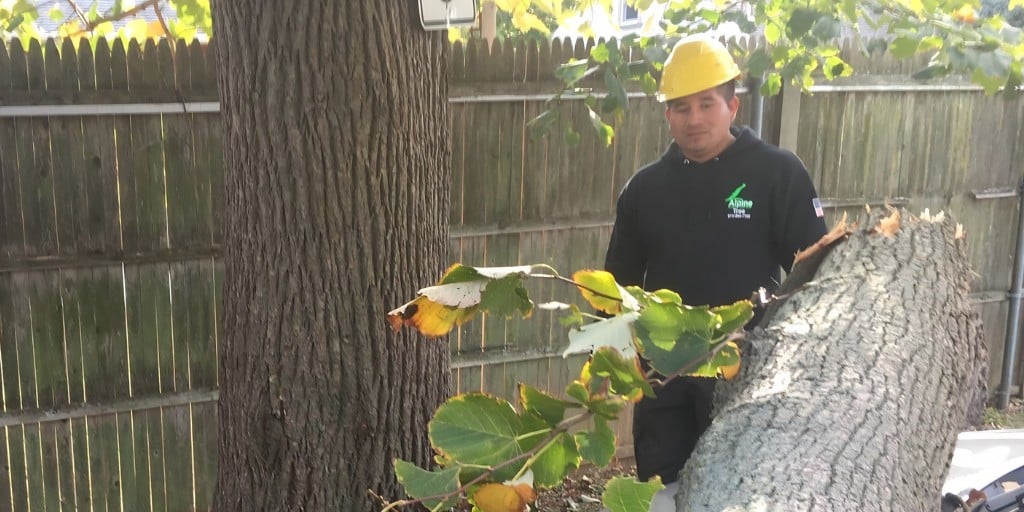
A tree may survive a hot, dry summer, but hidden root damage can leave it vulnerable to failure when high winds or saturated soils arrive later.
Alleviate Heat Stress in Your Trees with Alpine Tree
The forecast for summer 2026 calls for another hot stretch, and the developed parts of Morris County—Morristown, Madison, and Chatham, especially—put extra thermal pressure on trees that nearby open suburban lawns don’t see.
If you’re noticing symptoms on your trees or just want a baseline check before the heat really ramps up, our ISA Certified Arborists are happy to take a look. It’s easy to misdiagnose heat-stressed trees because the symptoms overlap with disease, pest damage, and nutrient deficiency.
Getting the diagnosis right is what determines whether the treatment helps. Alpine Tree is TCIA accredited, and you can request an estimate online or call us at 973-964-7798.
Table of Contents
Add a header to begin generating the table of contents


