While mature oak trees in Morris County may look healthy this winter, many are already harboring a silent threat that won’t reveal itself until later this summer. Bacterial leaf scorch, caused by bacteria that overwinter inside the tree’s water-conducting system, begins affecting new growth months before visible symptoms appear. Although this disease can affect several hardwood species, oaks are a common concern in residential landscapes due to their sensitivity and prevalence.
By the time leaf damage becomes obvious during periods of heat stress, the disease is already well established. That delay is what makes bacterial leaf scorch so costly to manage – and why planning ahead matters. For homeowners with mature oaks, late winter is the window to understand risk, evaluate options, and avoid being forced into reactive decisions once decline becomes obvious.
Key Takeaways
- Bacterial leaf scorch creates a distinctive yellow halo between healthy and damaged leaf tissue, unlike environmental stress showing gradual browning.
- Red oak species, including northern red oak, pin oak, and scarlet oak, are most vulnerable, while white oak varieties show greater resistance.
- Symptoms appear in early to mid-August in New Jersey, progressing from older leaves to newer growth over multiple seasons.
- Oxytetracycline injections can suppress symptoms and delay their appearance but require annual applications throughout the tree’s remaining lifespan.
- Prevention through resistant species selection remains the most effective long-term protection strategy.
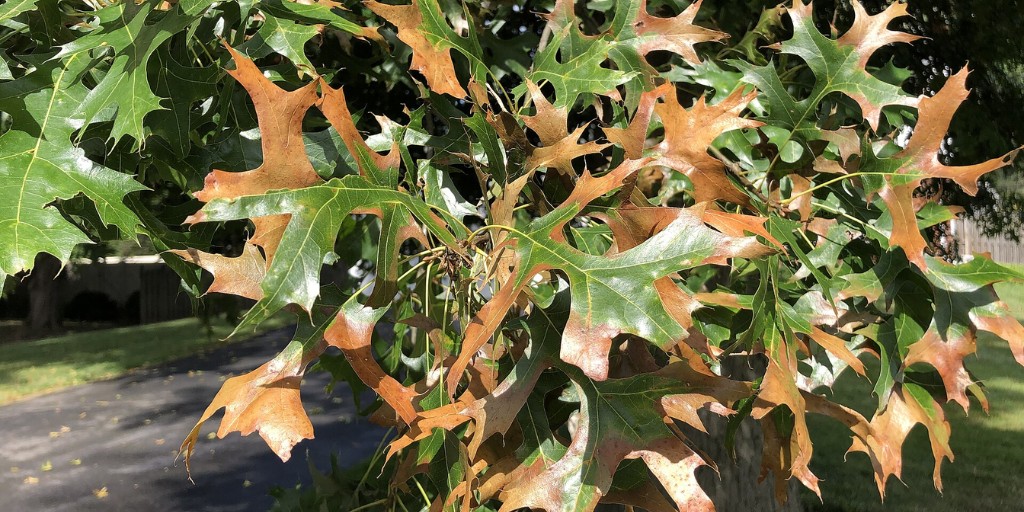
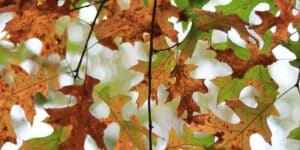
Pin Oak leaves showing symptoms of bacterial leaf scorch along Westwood Drive in the Mountainview section of Ewing Township, Mercer County, New Jersey Famartin, CC BY-SA 4.0
What Is Bacterial Leaf Scorch?
Bacterial leaf scorch is a chronic, incurable disease that affects oak trees and other hardwoods across New Jersey. It is caused by the bacterium Xylella fastidiosa, which lives inside the tree’s water-conducting system and interferes with its ability to move water from the roots to the canopy.
Unlike fungal leaf diseases that affect surface tissue, bacterial leaf scorch disrupts the tree internally. Trees may appear healthy for years while the infection slowly progresses.
How Bacterial Leaf Scorch Affects Oak Trees
Bacterial leaf scorch affects up to 30% of susceptible oak trees in established New Jersey neighborhoods. Once inside the tree, Xylella fastidiosa colonizes the xylem – the vessels responsible for water transport. As bacterial populations grow, they form blockages that restrict water movement, especially during periods of heat and drought stress.
Over time, this leads to:
- Water stress in the canopy
- Recurring leaf scorch symptoms
- Gradual decline in overall tree health
Because the bacteria remain inside the tree permanently, symptoms tend to return and worsen over successive growing seasons.
“In my 15 years as an ISA Certified Arborist treating bacterial leaf scorch in northern New Jersey, I’ve seen too many homeowners wait until their oak trees are severely compromised before seeking help. The key to managing this disease is early detection and proactive treatment planning before symptoms become widespread.” – Bill Switzler, ISA Certified Arborist, Alpine Tree Service
Why Bacterial Leaf Scorch Can’t Be Cured
Bacterial leaf scorch cannot be eliminated once a tree is infected. The bacteria survive within the wood through winter and resume activity as conditions warm. While certain treatments can suppress symptoms and slow decline, they do not remove the infection.
This makes management decisions – monitoring, treatment, or eventual removal – far more important than reactive care after visible decline sets in.
How Bacterial Leaf Scorch Spreads
The disease spreads primarily through sap-feeding insects, including leafhoppers, spittlebugs, and sharpshooters. These insects acquire the bacteria while feeding on infected trees and transmit it when they feed on healthy ones.
The bacteria are introduced directly into the tree’s vascular system through feeding wounds. For this reason, bacterial leaf scorch often spreads gradually within neighborhoods rather than appearing randomly.
Professional arborists also take precautions to prevent mechanical spread by disinfecting tools between trees, reducing the risk of accidental transmission during pruning.
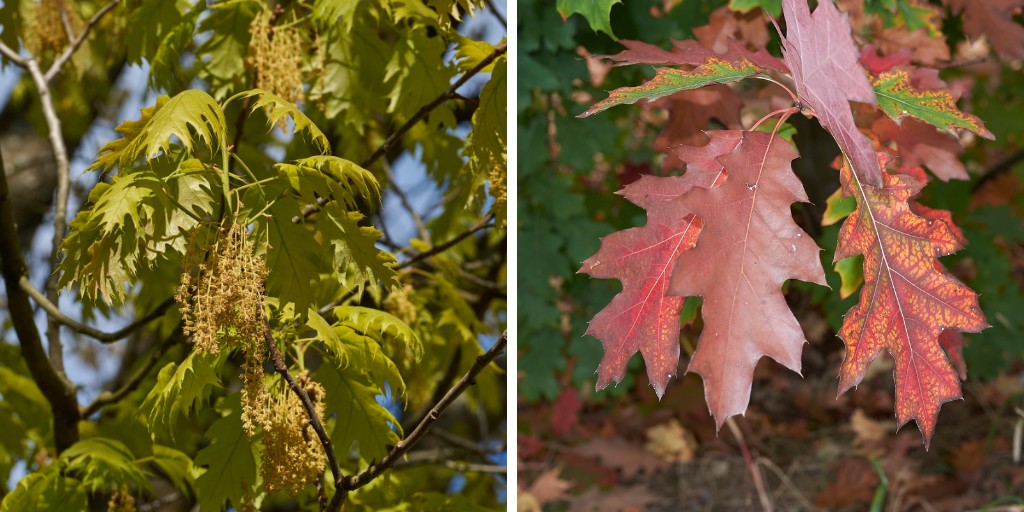
Northern red oak, New Jersey’s state tree, shows the highest susceptibility to bacterial leaf scorch among all oak species, making species selection critical for prevention strategies.
How to Identify Bacterial Leaf Scorch in Oak Trees
Accurate diagnosis requires understanding symptom timing, visual characteristics, and professional testing protocols.
When Symptoms Typically Appear in New Jersey
Bacterial leaf scorch symptoms typically become visible in early to mid-August throughout New Jersey, according to the New Jersey Department of Environmental Protection Forest Health section. This timing coincides with peak summer heat stress, when infected trees can no longer transport adequate water to maintain leaf function.
Environmental leaf scorch from drought stress typically appears earlier (June-July), while bacterial leaf scorch timing remains consistent regardless of rainfall.
Visual Characteristics That Distinguish Bacterial Leaf Scorch
Symptom progression follows a predictable pattern, starting with older leaves and moving toward newer growth over weeks to months.
Some symptoms to look for include:
- Yellow halo between healthy and damaged tissue
- Brown leaf margins with green interiors
- Older leaves affected before younger leaves
- Symptoms appear in mid-August regardless of rainfall
- Gradual crown decline over multiple seasons
- Branch dieback starting from leaf tips
The distinctive yellow halo between healthy and damaged leaf tissue provides the most reliable visual diagnostic feature. This yellow border appears as a 2-4mm band separating green healthy tissue from brown damaged areas, creating a clear demarcation, unlike gradual drought stress transitions.
Why Professional Diagnosis Is Necessary
Visual diagnosis alone cannot definitively confirm bacterial leaf scorch since several conditions produce similar symptoms. The Rutgers Plant Diagnostic Laboratory provides definitive testing using specialized techniques to detect Xylella fastidiosa bacteria. Professional testing provides crucial confirmation before committing to multi-year treatment programs.
What Treatment Options Are Available for Bacterial Leaf Scorch?
Treatment approaches focus on symptom suppression and tree life extension rather than disease cure.
What Treatment Can (and Can’t) Do
No cure exists for bacterial leaf scorch, making realistic expectations important. Treatments can suppress bacterial populations temporarily, allowing treated trees to maintain better appearance for several additional years.
Treatment requires annual applications throughout the tree’s remaining lifespan since bacterial populations rebound each growing season. Trees with early-stage symptoms (less than 25% crown affected) respond better than severely infected specimens.

Professional diagnosis and treatment selection requires expertise with specialized materials not available to homeowners, emphasizing the importance of working with licensed applicators.
How Antibiotic Injections Help Manage Symptoms
Oxytetracycline injections directly into the tree trunk provide the most effective treatment for suppressing symptoms. Professional arborists inject this antibiotic into the tree’s vascular system where it circulates throughout the crown, reducing bacterial populations in infected xylem vessels.
Research studies published in Arboriculture & Urban Forestry on pin oak treatment in Kentucky show that oxytetracycline injections reduced scorch levels and delayed symptom appearance by about two weeks compared to untreated trees, with best results when treatment begins before extensive crown damage develops.
Treatment protocols require precise timing, typically administered in late April through May in New Jersey before peak bacterial multiplication begins. Multiple injection points around the trunk base allow for even antibiotic distribution throughout the crown.
What to Expect for Ongoing Care and Cost
Managing bacterial leaf scorch requires a long-term approach, not a one-time treatment. Antibiotic injections must be applied annually to maintain symptom suppression, with costs varying based on tree size, trunk diameter, and overall condition.
Planning typically happens in late winter so treatments can be scheduled before the spring application window. For high-value mature oaks, multi-year treatment programs often make financial sense, especially when compared to the cost of removal, replacement, and the loss of established canopy.
How Can I Prevent Bacterial Leaf Scorch from Infecting My Trees?
Prevention strategies focus on species selection, landscape management, and tree health optimization.
Choosing Tree Species with Lower Risk
Planting species with greater tolerance helps reduce future risk. White oak group species – including white oak, chestnut oak, and bur oak – tend to show better resistance than red oak varieties while providing similar landscape value. Non-oak alternatives, such as black tupelo, American beech, and Ohio buckeye, can also diversify plantings and reduce overall vulnerability.
Designing Landscapes That Limit Disease Pressure
Design mixed-species landscapes rather than monoculture plantings to limit disease spread between adjacent trees. Encourage beneficial insects that prey on bacterial leaf scorch vectors through strategic plantings of native flowering plants.
Reducing Tree Stress Through Proper Care
Maintain optimal tree health through proper irrigation, mulching, and fertilization practices that reduce overall stress levels. Implement regular pruning schedules that remove dead or weakened wood before it becomes attractive to wood-boring insects.
In addition, always work with Certified Arborists to develop comprehensive plant health care programs addressing soil conditions, nutrient management, and pest monitoring.
Frequently Asked Questions About Bacterial Leaf Scorch
How long does it take for bacterial leaf scorch to kill a tree?
Most infected oak trees survive 3-7 years after initial symptoms appear, though this varies based on tree size, health, and infection severity. Annual treatments can extend this survival period significantly.
Can I treat bacterial leaf scorch myself?
No, you can’t treat bacterial leaf scorch yourself. Effective treatment requires professional injection equipment and pesticide application licenses. The antibiotics used aren’t available to homeowners, and proper injection technique is essential for both effectiveness and tree safety.
Is it worth treating a tree with bacterial leaf scorch?
Treatment makes economic sense for high-value trees when symptoms affect less than 25-30% of the crown. Consider annual treatment costs against replacement expenses – treating a valuable mature tree for several years often provides significant cost savings compared to immediate removal and replacement.
When is the best time to schedule bacterial leaf scorch treatment in New Jersey?
Schedule treatments by March for April-May application timing. The narrow treatment window requires advance planning since injections must occur before bacterial populations multiply in late spring.
Will removing infected trees stop the spread?
Removing infected trees reduces local bacterial sources but doesn’t eliminate transmission risk since vector insects travel between properties. Focus prevention efforts on planting resistant species and maintaining healthy growing conditions.
Are there any oak trees resistant to bacterial leaf scorch?
White oak group species, including white oak, chestnut oak, and bur oak, show much better resistance than red oak varieties. While not completely immune, white oaks rarely develop severe symptoms and typically don’t require treatment.

Professional injection treatment requires precise timing and specialized equipment to effectively suppress bacterial leaf scorch symptoms throughout the growing season.
Protect Your Oak Trees with Professional Assessment and Treatment from Alpine Tree
Bacterial leaf scorch represents a serious threat to northern New Jersey’s oak population, but early identification and appropriate management can extend tree life significantly. Planning now allows homeowners to make informed decisions about treatment options, replacement strategies, and prevention measures before symptoms appear in late summer.
The team at Alpine Tree contains ISA Certified Arborists who use their expertise to accurately diagnose and treat your trees for bacterial leaf scorch. We’ll inform you of the best way to keep your trees protected from the disease and recommend the best course of action for your oaks. Call us today at 973-964-7798 or request an appointment online today.
Table of Contents
Add a header to begin generating the table of contents


