If those brown leaf spots or sooty patches on your trees looked minor last fall, spring is when you’ll find out whether fungus had bigger plans. Many fungal tree diseases in New Jersey overwinter quietly, then flare up as temperatures warm and rainfall increases.
With wetter spring weather ahead, and fungal pressure rising across Morris, Essex, Bergen, and Union counties, early identification gives homeowners the best shot at preserving their trees and preventing spread. This guide covers the 12 fungal diseases arborists see most often – plus what homeowners should know about treatment timing.
Key Takeaways
- Early spring fungicide applications typically provide the most effective protection against New Jersey’s common fungal diseases.
- Sooty mold has become a significant concern due to spotted lanternfly infestations creating ideal conditions for fungal growth.
- Professional disease identification is critical since many fungal diseases look similar but require different treatment approaches.
- Beech trees face multiple fatal diseases with limited treatment options, making prevention and early detection essential.
- Proper sanitation and tree health maintenance prevent most fungal disease problems before they require expensive treatment.
12 Common Fungal Tree Diseases in You Need to Know About
New Jersey’s humid climate creates ideal conditions for fungal pathogens to thrive, especially during wet spring and summer periods.
Unlike dramatic insect damage, fungal diseases are subtle threats that quietly progress over months or even years. Many enter through wounds or stressed tissues, then spread internally before visible symptoms appear – which is why prevention and early intervention are more effective than reactive treatment.
Understanding the specific disease matters, because many fungal infections look similar but require different treatment approaches. Professional identification can prevent costly misdiagnosis and help determine whether treatment is recommended or if monitoring is enough.
PRO TIP: The appropriate time to treat for different diseases may vary. For comprehensive information, see our previous article on when to treat tree pests and diseases in New Jersey.
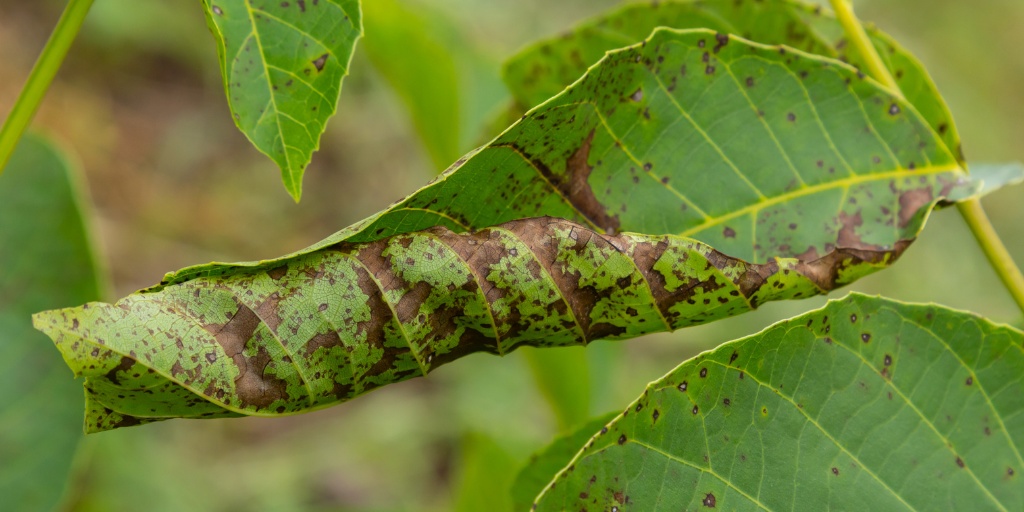
Anthracnose appears as irregular brown blotches that follow leaf vein patterns, commonly affecting dogwood, sycamore, maple, and oak trees during wet spring weather.
1. Anthracnose (Colletotrichum and Gloeosporium species)
Anthracnose stands out as the most common and treatable fungal disease affecting New Jersey trees. This spring-active disease targets:
- Dogwood
- Sycamore
- Maple
- Oak
It causes irregular brown blotches that follow leaf vein patterns rather than forming circular spots. The disease thrives during cool, wet spring weather typical of our region, with spores spreading through wind-driven rain and splashing water.
Symptoms appear as angular brown patches along leaf veins, often starting on lower branches where humidity remains highest.
We have seen excellent results treating anthracnose in high-value species with preventive fungicides. Arborists will work with you to determine the best time to treat your trees based on weather conditions.
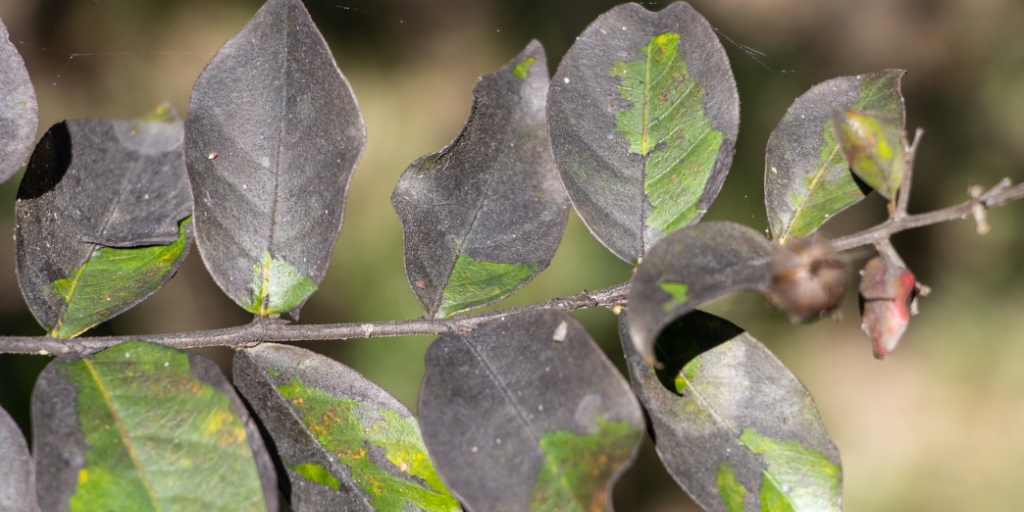
Sooty mold creates a thick black coating on leaves and branches, indicating an underlying insect problem that must be addressed for effective treatment.
2. Sooty Mold (Capnodium species)
Sooty mold has emerged as a significant threat across New Jersey. Unlike primary fungal diseases that attack healthy tissue, sooty mold development indicates an underlying insect problem that must be addressed first. Researchers have linked sooty mold to the expanding spotted lanternfly population. The honeydew from the spotted lanternfly leads to a thick black coating on:
- Leaves
- Branches
- Surfaces beneath affected trees
The problem with the black coating is that it blocks sunlight from reaching leaves, reducing photosynthesis and weakening trees over time. Heavy infestations can completely cover foliage, creating an unsightly mess that spreads to outdoor furniture, walkways, and vehicles.
Effective treatment requires controlling the honeydew source through systemic insecticides rather than trying to remove the mold directly.
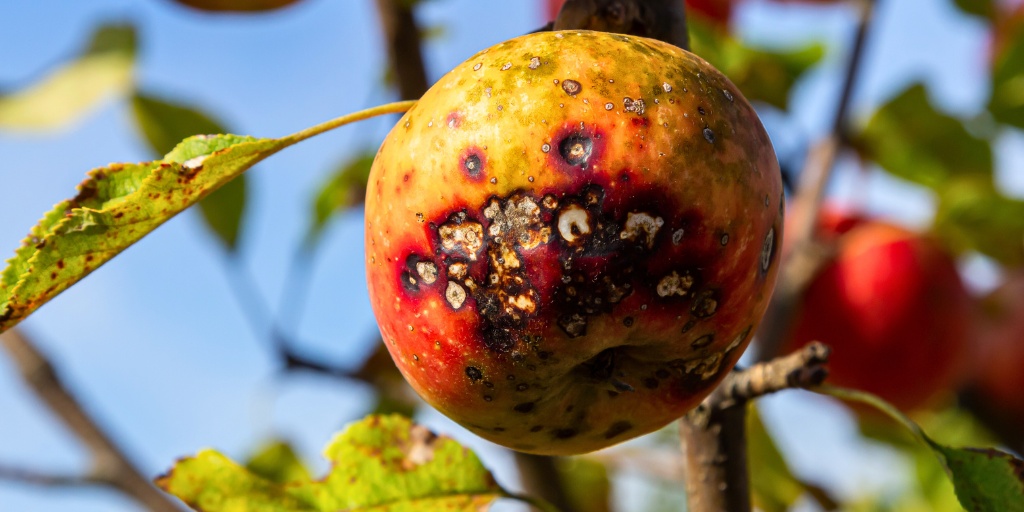
Apple scab creates dark, velvety spots on both leaves and fruit, significantly reducing aesthetic appeal and fruit quality on apple and crabapple trees.
3. Apple Scab (Venturia inaequalis)
Apple scab commonly affects apple and crabapple trees throughout New Jersey. The disease creates dark, velvety spots on leaves and fruit that significantly reduce tree aesthetics and fruit quality.
Apple scab overwinters in fallen leaves, releasing spores during spring rainfall that infect new growth as leaves emerge. Primary infection occurs during cool, wet spring weather when ascospores from overwintered leaf debris are released into the air.
Preventive spring fungicide applications provide the most effective control, with timing based on bud break and weather conditions rather than fixed dates. Some methods to control apple scab include:
- Sanitation practices (removing fallen leaves and infected fruit)
- Improving air circulation with pruning
- Selecting disease-resistant varieties
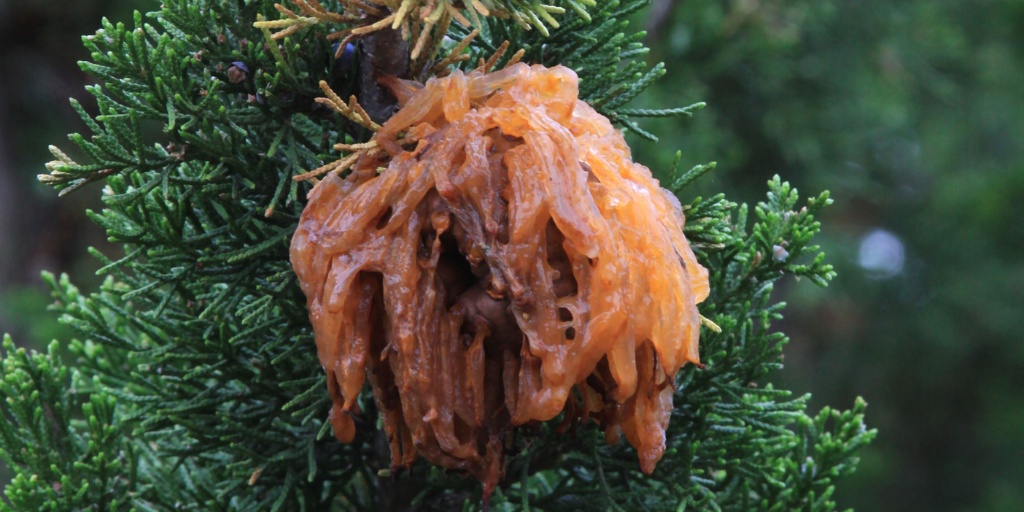
Cedar-apple rust produces bright orange, gelatinous tendrils on cedar trees during wet spring conditions, releasing spores that infect nearby apple family trees.
4. Cedar-Apple Rust (Gymnosporangium juniperi-virginianae)
Cedar-apple rust is a unique disease that requires a cedar or juniper alongside an apple tree to complete its unique two-host life cycle. The disease produces distinctive bright orange galls on cedars during spring, releasing spores that travel up to several miles to infect apple, crabapple, and hawthorn trees.
The most visible symptom appears as orange, gelatinous tendrils emerging from cedar galls during wet spring weather. These tendrils release spores that cause yellow spots with orange centers on apple family leaves, often followed by premature leaf drop and reduced fruit quality.
Managing cedar-apple rust becomes challenging when both host species are present in the landscape or surrounding area. Removing alternate hosts provides the most effective long-term control when feasible, though targeted spring fungicide applications protect susceptible trees during the critical infection period.
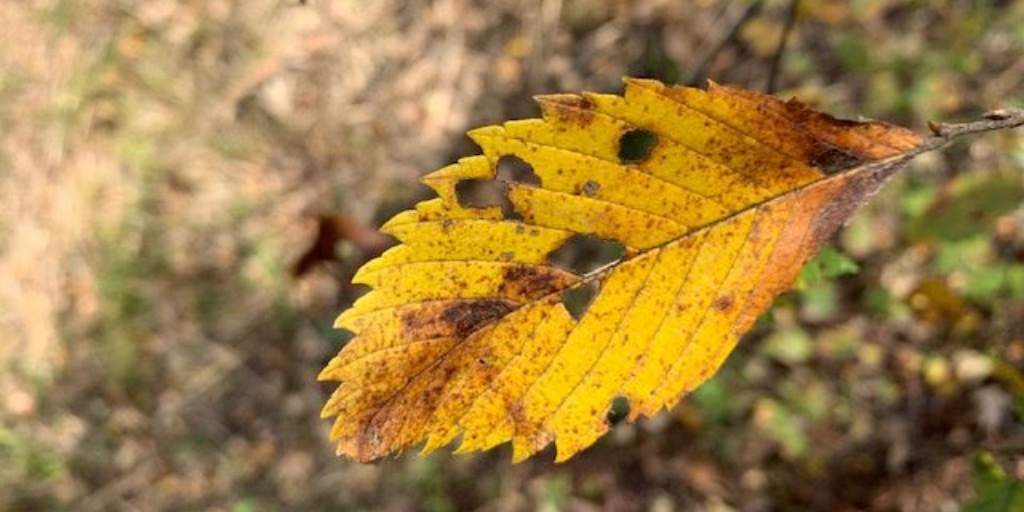
Dutch elm disease causes characteristic yellowing and wilting of elm leaves, typically progressing from individual branches throughout the crown before killing the tree.
5. Dutch Elm Disease (Ophiostoma novo-ulmi)
Dutch elm disease remains a fatal threat to American elm trees, spread primarily by bark beetles that carry fungal spores between trees. Once infected, trees typically die within one to two growing seasons as the fungus blocks water transport systems. The disease progresses rapidly once symptoms appear, beginning with the yellowing and wilting of individual branches that spread throughout the crown.
Prevention through proper pruning timing proves critical since fresh pruning wounds attract elm bark beetles during their active flight periods. Avoid pruning from March through October when beetle activity peaks, with dormant season work providing the safest approach.
Professional tree removal becomes necessary once infection is confirmed, as diseased trees pose safety hazards and serve as breeding sites for beetles that spread the disease to healthy elms.
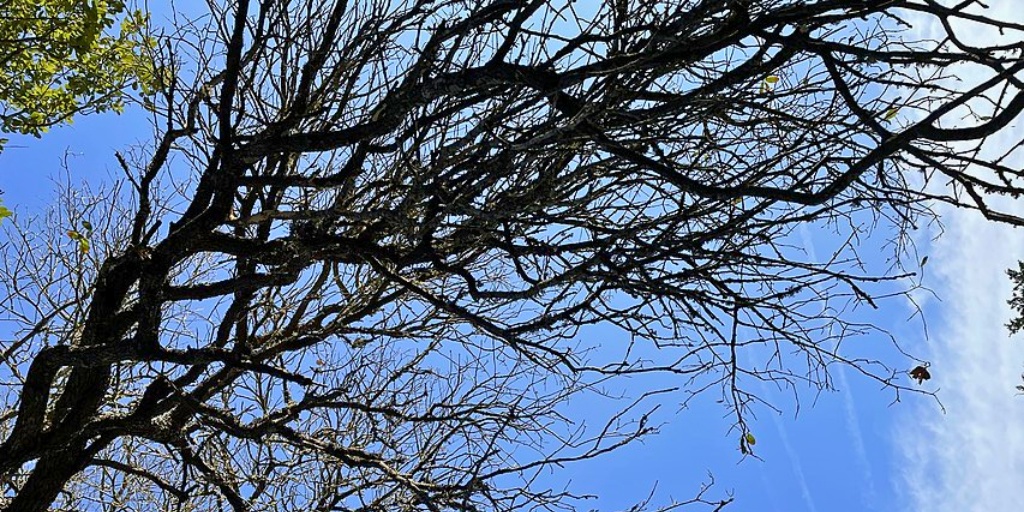
Oak wilt causes rapid leaf browning and branch dieback in red oak species, often killing entire trees within a single growing season. link source
6. Oak Wilt (Bretziella fagacearum)
Oak wilt is a vascular disease that causes rapid decline in red oak species, often killing trees within a single growing season. The disease spreads through root grafts between nearby oaks and through beetles attracted to fresh wounds during the spring months when beetle activity and spore production peak.
Early symptoms include rapid browning of leaves starting at margins and tips, often progressing from the crown downward.
Oak wilt management focuses on avoiding pruning oaks during spring and summer months and immediately treating any wounds that occur during restricted periods. Preventive fungicides are the only way to protect your oak trees from contracting the disease.
WARNING: Oak wilt hasn’t reached New Jersey yet, but avoiding spring and summer pruning of oak trees is critical to keeping this devastating disease out of our state. If you suspect your tree may have an infection, speak with an arborist immediately for a diagnosis.
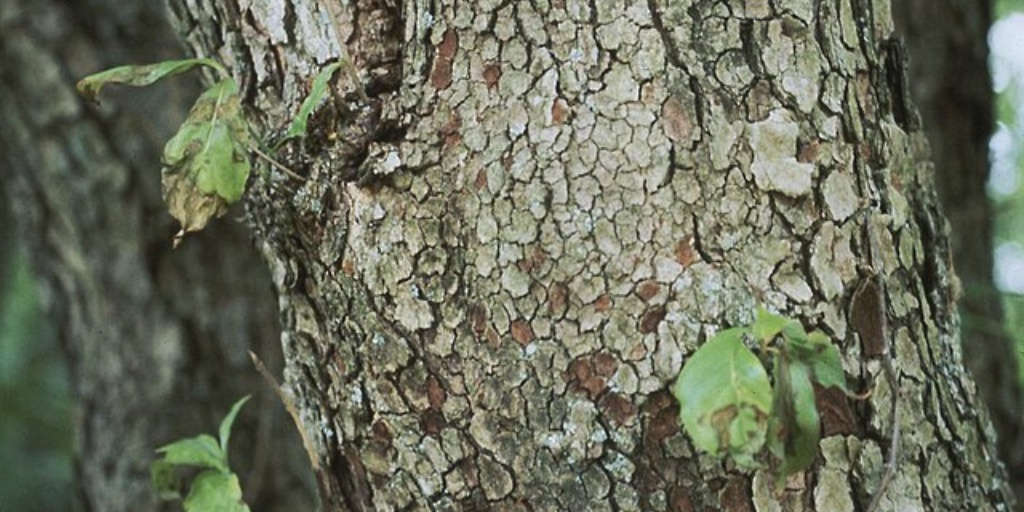
Dogwood anthracnose attacks both leaves and bark, creating cankers that can girdle branches and kill stressed native flowering dogwoods. Photographer: Charles Hoysa, Virginia Cooperative Extension, Bugwood.org.
7. Dogwood Anthracnose (Discula destructiva)
Dogwood anthracnose poses a specific threat to native flowering dogwoods, causing progressive dieback that often proves fatal to stressed trees. Most often found on trees in shaded, moist locations, this disease differs from common anthracnose by attacking twigs and branches in addition to leaves, creating cankers that girdle and kill affected areas.
Prevention is as easy as selecting a hybrid dogwood variety that resists the disease. These hybrids represent the most promising long-term solution for maintaining dogwoods in landscapes, where disease pressure remains high.
Early spring fungicide applications provide protection for susceptible trees, though cultural management focusing on reducing tree stress through:
- Proper watering
- Mulching
- Site selection
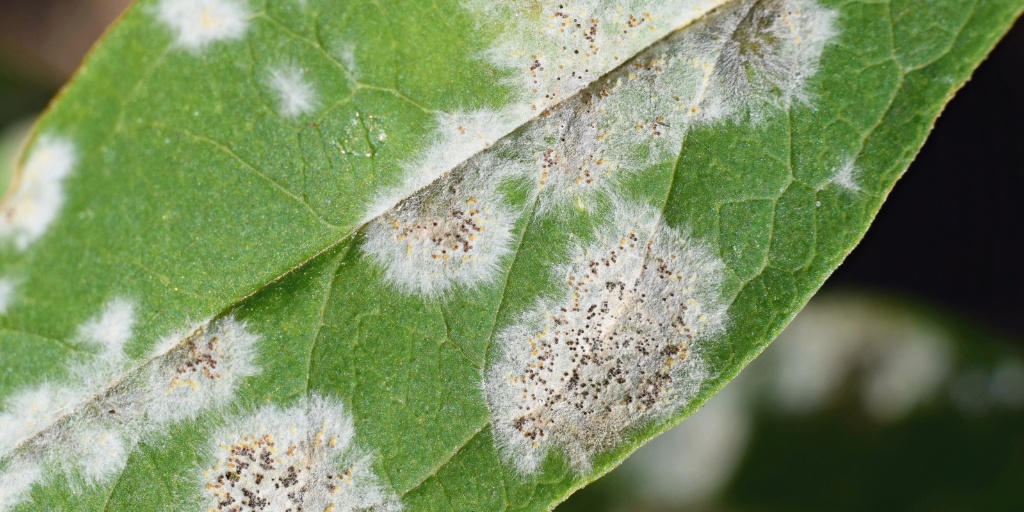
Powdery mildew creates a distinctive white, powdery coating on leaf surfaces during periods of warm days and cool nights with high humidity.
8. Powdery Mildew (Various species)
Powdery mildew appears as white, powdery coating on leaf surfaces, typically developing during periods of warm days and cool nights with high humidity. While generally not fatal, this disease reduces tree vigor and creates unsightly foliage that detracts from landscape appearance.
PRO TIP: Unlike many fungal diseases, powdery mildew can develop under relatively dry conditions, making it common on trees stressed by drought or poor air circulation.
Powdery mildew spreads rapidly during favorable conditions, often covering entire leaf surfaces within days. Improving air circulation through proper pruning helps reduce disease pressure, while selecting resistant varieties provides long-term prevention in landscape renovations.
Summer fungicide applications control active infections, though preventive treatments beginning at bud break provide better results with fewer applications required throughout the growing season.
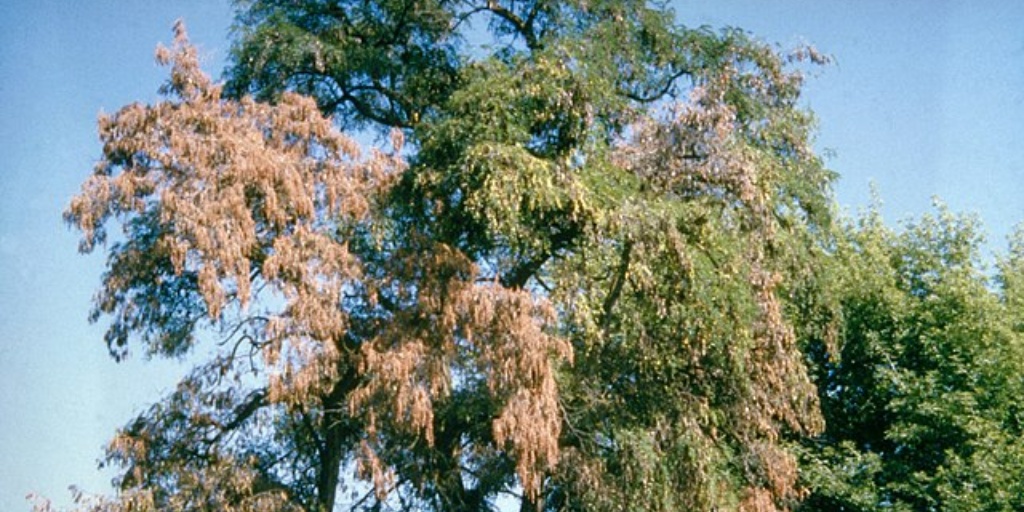
Symptoms of Verticillium Wilt (Verticillium albo-atrum) on the crown of an infected tree.
9. Verticillium Wilt (Verticillium dahliae and V. albo-atrum)
Verticillium wilt attacks a tree’s vascular system. These soil-borne pathogens cause characteristic one-sided wilting patterns as fungal growth blocks water transport. The disease typically affects stressed trees or those growing in previously cultivated soils where the pathogen persists. Diagnosis requires laboratory testing since symptoms can be confused with other vascular diseases or environmental stress factors.
No chemical treatments effectively control verticillium wilt once infection occurs, making prevention through tree health maintenance and proper species selection critical. The disease often shows a distinctive sectional pattern where individual branches or portions of the crown wilt while adjacent areas remain healthy.
Focus on maintaining optimal growing conditions through:
- Proper watering
- Fertilization
- Stress reduction
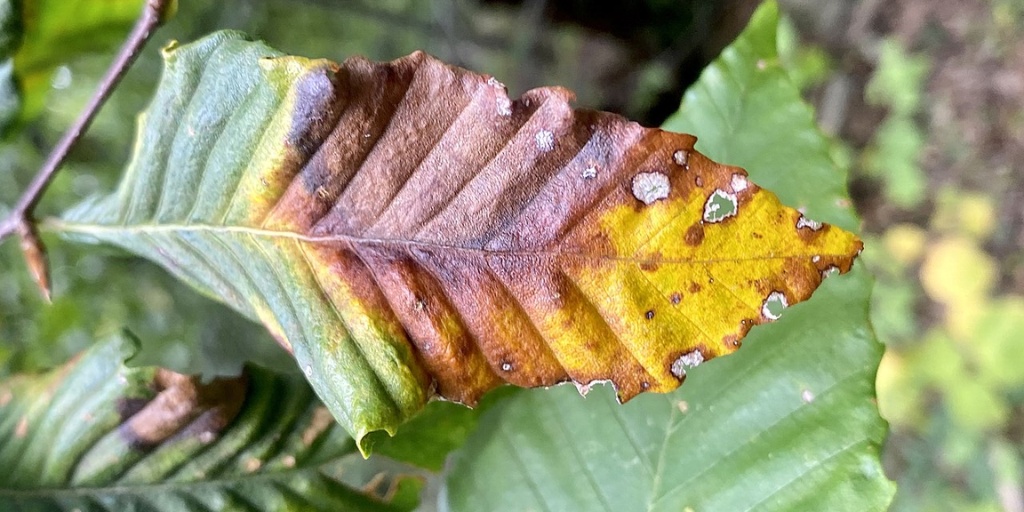
Beech leaf disease creates distinctive dark banding between major leaf veins, with affected trees often experiencing crown dieback within two to three years of initial symptoms. This image was originally posted to iNaturalist by sadawolk (link here). It was reviewed on 9 January 2022 by INaturalistReviewBot and found to be published under the terms of the Cc-by-4.0 license.
10. Beech Leaf Disease (Litylenchus crenatae)
Beech leaf disease represents the most serious emerging threat to American beech trees, caused by a microscopic nematode that creates characteristic dark banding on leaves. Since its first detection in Essex, Morris, and Bergen counties in 2020, the disease has shown rapid spread with mortality rates exceeding 90% in affected trees. The nematode feeds within leaf tissue, creating distinctive striping between major veins that becomes more pronounced as the season progresses.
Current research from Rutgers shows that severely affected trees often experience crown dieback within two to three years of initial symptom appearance, with younger trees declining more rapidly than mature specimens.
Currently, limited treatment options exist for beech leaf disease. Professional injection treatments using Arbotect 20-S can slow disease progression in some cases, though results remain variable and treatment requires specialized equipment and licensing.
“I’ve never seen a tree disease spread as rapidly as beech leaf disease. What makes it particularly challenging is that by the time homeowners notice the distinctive leaf striping, the tree is already severely compromised. Early professional evaluation is absolutely critical – waiting even one season can mean the difference between saving a mature beech tree and losing it entirely.” – Bill Switzler, ISA Certified Arborist and Owner of Alpine Tree
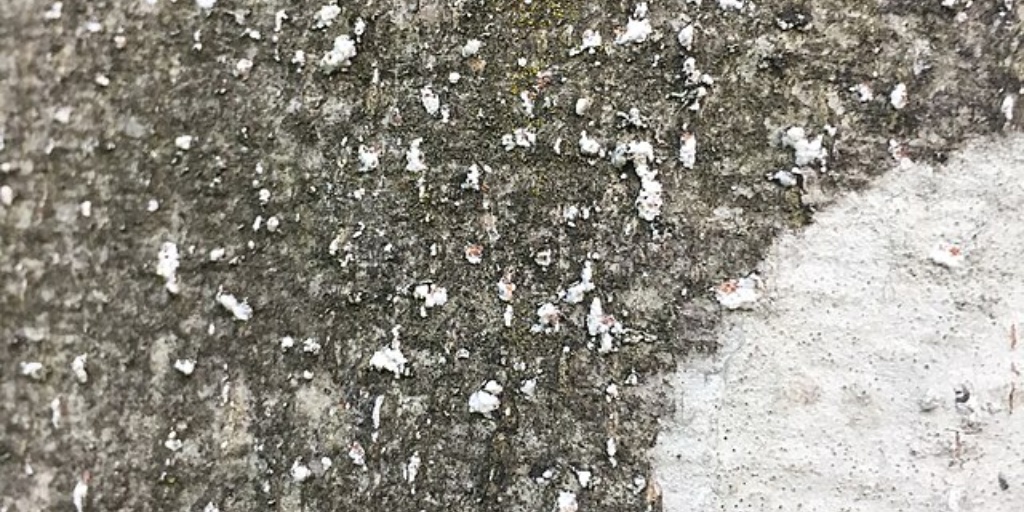
Beech bark disease begins with scale insects creating white woolly patches on bark, which allow deadly Nectria fungi to enter and kill the tree’s cambial tissue. White varied shaped woolly looking dots on the gray tree trunk. The bark of the beech tree showing signs of beech bark disease. The white wax secreted by the beech scale on the trunk of trees indicates that the trees are infected.
11. Beech Bark Disease (Nectria spp.)
Beech bark disease represents a complex insect-fungal disease where scale insects create entry points for Nectria fungi that ultimately kill cambial tissue. White woolly scale insects appear first, followed by fungal cankers that girdle branches and trunks. This disease progresses slowly compared to beech leaf disease, often taking several years to kill mature trees.
Scale control through horticultural oil applications provides the most effective prevention, targeting the insect phase before fungal infection occurs. Treatment timing becomes critical, with dormant season applications proving most effective for scale population reduction.
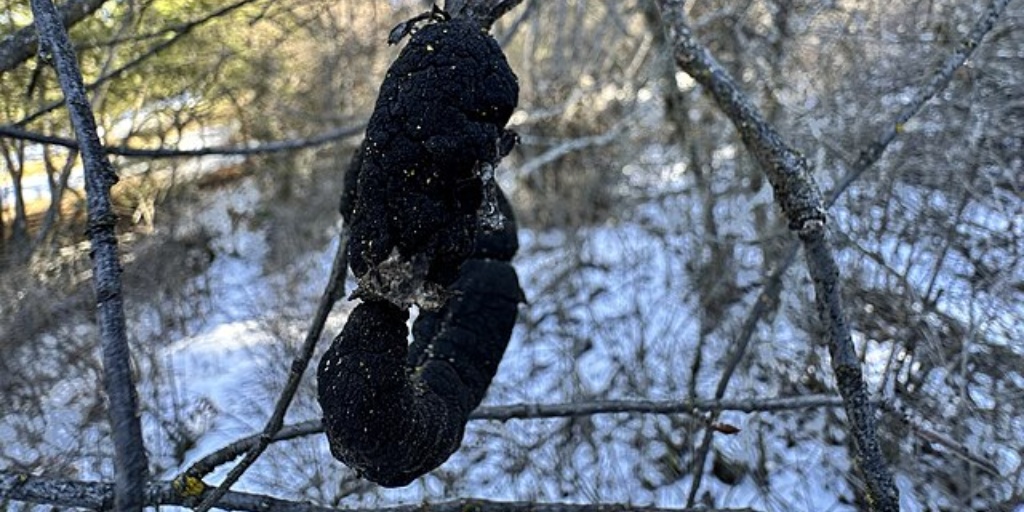
Black knot disease creates distinctive black, warty growths on cherry and plum branches that progressively enlarge and can eventually girdle affected areas. image link- here.
12. Black Knot (Apiosporina morbosa)
Black knot disease affects cherry and plum trees, creating distinctive black, warty growths on branches that progressively enlarge and girdle affected areas.
This disease overwinters in these characteristic galls, releasing spores during wet spring weather that infect new growth. These galls can eventually kill branches by cutting off nutrient flow, significantly reducing the tree’s health and appearance.
Dormant season pruning provides the most effective control by removing infected branches before spore release occurs. Cuts should be made at least six inches below visible symptoms to ensure complete removal of infected tissue.
Spring fungicide applications protect new growth during the critical infection period, with timing based on bud break and weather conditions rather than calendar dates. Sanitation becomes critical for preventing disease establishment, with all infected material requiring proper disposal rather than composting.
Frequently Asked Questions About Common Fungal Tree Diseases
What are the most common fungal tree diseases in New Jersey?
The most common fungal diseases include anthracnose, sooty mold (increasing due to spotted lanternfly), apple scab, cedar-apple rust, and powdery mildew. Beech leaf disease has been rapidly spreading through Morris, Essex, and Bergen counties since 2020.
When should I treat my trees for fungal diseases?
The most effective treatment window is mid-April through May, when new growth emerges. Treatment timing should be based on weather conditions rather than calendar dates, which is why professional evaluation is recommended.
How can I tell if my tree has anthracnose?
Anthracnose appears as irregular brown blotches that follow leaf vein patterns, often starting on lower branches during wet spring weather.
When should I call a professional arborist?
Contact a Certified Arborist if you notice:
- Unusual leaf spots
- Premature leaf drop
- Decline in tree health
Professional identification is crucial since many diseases look similar but require different treatments.
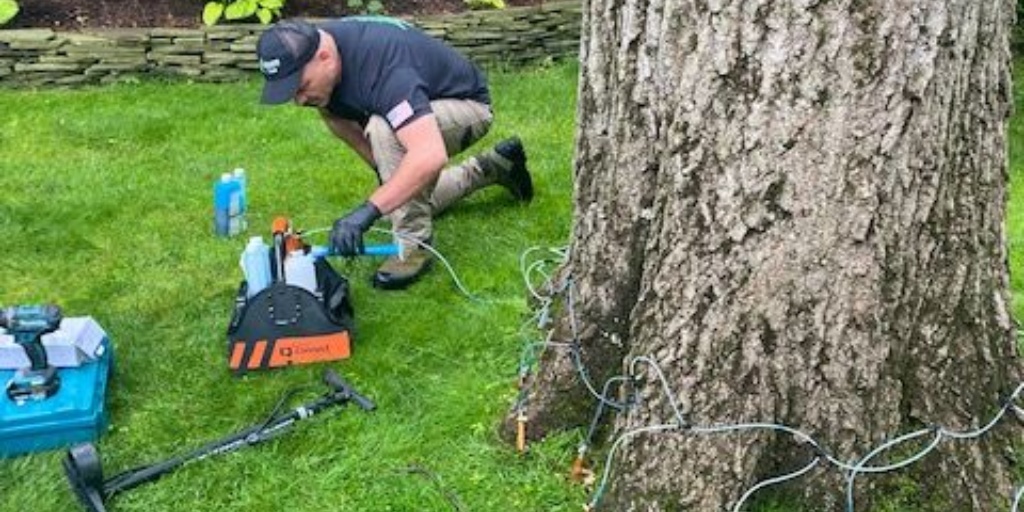
Professional plant health care treatments like trunk injections provide targeted disease control while minimizing environmental impact.
Protect Your Trees with Professional Disease Management from Alpine Tree
Fungal diseases present ongoing challenges for New Jersey homeowners, but early detection and proper treatment can save valuable trees. The key lies in understanding that timing matters more than calendar dates, as weather conditions determine optimal treatment windows.
Alpine Tree has proven success managing fungal diseases through plant health care programs tailored to Morris County’s climate. Our TCIA-accredited team combines professional disease identification with precise treatment timing. Call us at 973-964-7798 or request an appointment online to schedule your spring treatments today.
Table of Contents
Add a header to begin generating the table of contents


