

Every winter, our area sees massive storms that leaves downed trees and branches. Many homeowners worry about whether their trees are safe and how to protect their property. Investing in pruning for storm resistance is one of the easiest things to do to reduce the risk of extensive damage. Learn how pruning can make your trees more storm-resistant in Morris County, New Jersey.
Key Takeaways
- Removing dead, broken, or diseased branches (deadwood) is essential as they lack structural integrity and are more likely to break during extreme weather.
- Shortening overly long branches reduces their weight and moves their center of gravity closer to the trunk, making trees more secure during storms.
- Pruning young trees prevents structural weaknesses like codominant stems (multiple trunks).
- While regular professional pruning helps protect trees from storm damage, additional measures, like encouraging good root health and planting trees together, can further increase storm resistance.
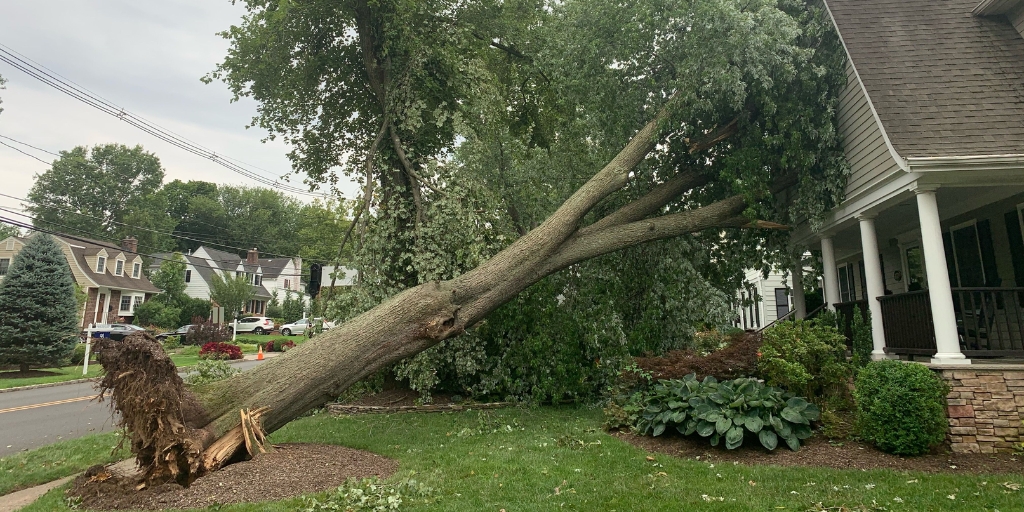
Without proper preventive pruning, trees can uproot during severe weather, causing significant property damage and safety hazards.
Why Are Morris County Trees at Risk During Winter Storms?
The high winds, heavy rain, and snow of winter storms can damage your property in many ways. One of the most significant risks during a storm is your trees, as they can end up with broken branches that fly into structures. Worse yet, trees may uproot and take out power lines or crash into your home.
While there’s no way to make a tree 100 percent safe (other than to remove it entirely), there are ways to mitigate the risks.
WARNING: Morris County regularly sees nor’easters each winter. Without proper pruning, your trees are more likely to fail during these destructive storms.
What Tree Pruning Methods Help Prevent Storm Damage?
Proper tree pruning does more than make your trees look tidy – it strengthens them against the high winds, heavy snow, and ice that storms bring to Morris County. When done by a reputable company, strategic pruning can reduce the risk of storm damage by addressing weak spots before they fail.
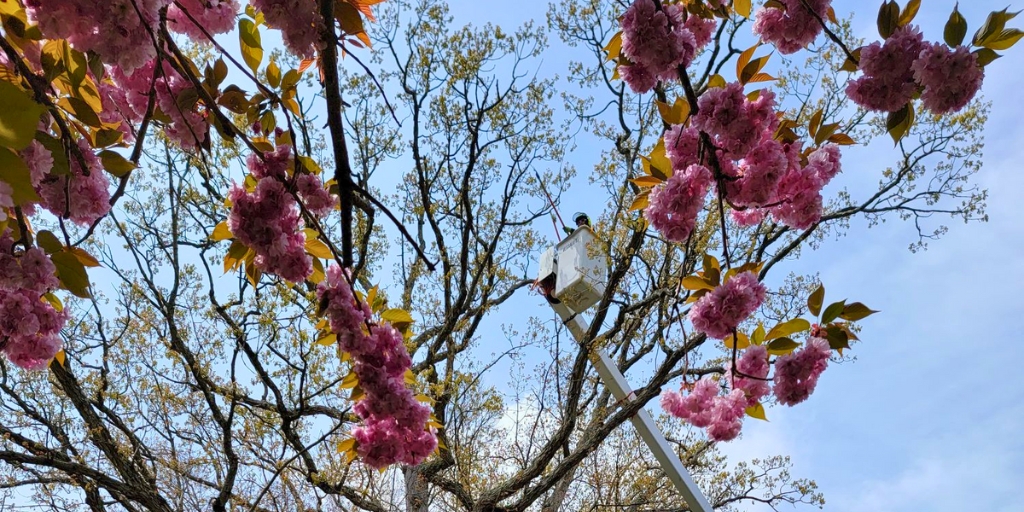
Strategic pruning during dormant seasons strengthens trees against future storm damage while preserving their natural beauty.
Remove Deadwood Regularly
The first priority when pruning for storm resistance should be any limbs that are dead, broken, or diseased (something arborists collectively call deadwood). These branches serve no purpose for a tree, and we recommend having an arborist remove them as soon as you see them.
Because deadwood lacks the strength of healthy, living branches, it becomes a major liability when storms roll through. All it takes is one gust or a layer of ice to send it crashing down.
In summer, spotting deadwood is usually easier, as branches without leaves stand out clearly. However, deadwood is a problem year round, especially in the winter. If you aren’t sure what constitutes deadwood and what is alive, have a professional tree pruning service handle the job.
Reduce Overextended or Heavy Branches
If you haven’t had a professional prune a tree in a long while, it may develop overly long branches that have grown far too long to support. This creates a potential weak point during a storm. Think of it like a tape measure. When you extend it out a few inches, it is easy to have it maintain its shape. However, as you keep elongating it, it becomes much more challenging to keep straight until it bends.
Shortening long branches will reduce their weight and move their center of gravity closer to the tree trunk, making them more secure.
“Shortening overly long branches is good for improving tree safety, but it isn’t something to do with no thought behind it. There’s more that goes into the process than just picking an arbitrary line and cutting the branch there. We have to plan where to cut to allow the tree to heal the wound quickly and avoid placing too much stress on it. If you don’t prune them in the right place, you’re going to have some problems later on.” – Bill Switzer, Owner and Arborist at Alpine Tree
Train Young Trees for Strong Structure
A little work for your young trees today can save you a lot of headaches many years down the road when they are mature. Some structural weaknesses that develop in a tree start when it is young, and early correction can reduce the risk of tree failure during a storm.
One of the most common problems trees develop when they are young is codominant stems (or trees with multiple trunks). Ideally, a tree should have one central trunk from which all other branches emerge. A tree with a single trunk is much stronger and more resistant to storm damage than ones with codominant stems.
Trimming a tree when young can stop it from developing poor structure. This process, called training, encourages a tree to grow in a certain way.
PRO TIP: Due to its importance, it is best to leave young tree pruning to a professional who knows the proper way to trim it, especially if you don’t know the basics of pruning. Removing too many branches or cutting them in the wrong place can harm your young tree and possibly kill it.
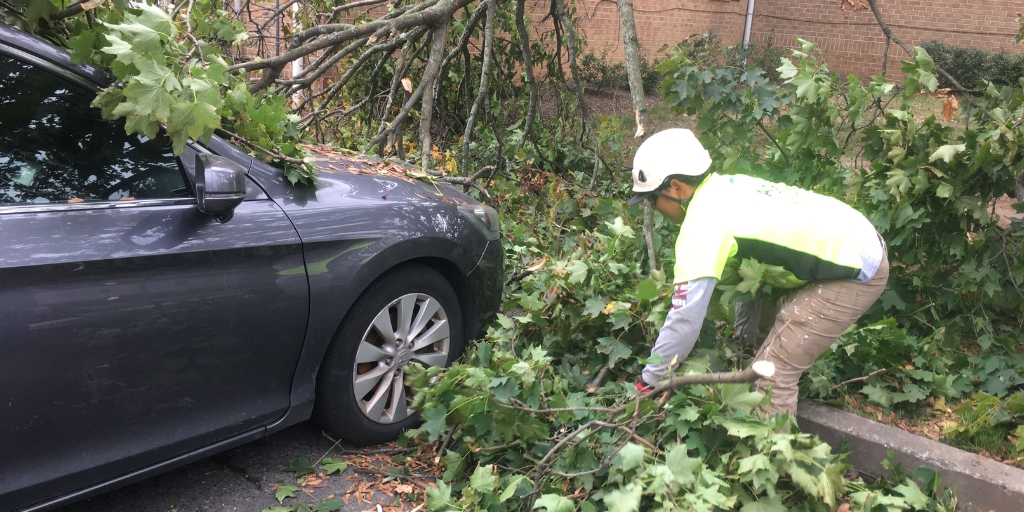
Alpine Tree’s emergency response team quickly removes storm debris, but preventive pruning could have reduced this risk.
Frequently Asked Questions About Pruning to Reduce the Risk of Storm Damage
How often should I have a professional prune my trees to protect them from storm damage?
In most instances, your mature trees will need pruning every 3-5 years to improve their structure and control their size. However, they may need more frequent work if they are overgrown or have suffered frequent storm damage. Young trees also demand consistent trimming to shape and train them to grow correctly.
Should trees be trimmed after a Morris County storm?
After any storm, especially one that had significant precipitation and wind, we recommend inspecting your trees for signs of damage. Trimming deadwood after a storm will increase your tree’s resistance to future damage when the next period of extreme weather strikes.
When should I prune my trees to prepare them for storms?
Winter is the best time to do most tree pruning in Morris County. However, there is never a bad time to prepare your tree for storms with trimming, as deadwood pruning is something to do in any season. If you spot deadwood in the summer and decide to trim, keep it light and targeted to avoid opening your tree up to diseases like oak wilt.
What can I do for my trees besides pruning to make them more storm resistant?
Other ways to make your trees more resistant to storm damage include:
- Encourage good root health by providing water and mulch and avoiding compacted soil.
- Plant trees together to avoid solitary trees that bear the brunt of the wind.
- Choose trees with strong wood that are naturally resistant to storm damage when planting.
Make Your Trees Safer in Storms with Alpine Tree’s Expert Care
Storm-resistant trees don’t happen by accident — they’re the result of smart, well-timed pruning. Removing weak limbs, reducing heavy branches, and shaping young trees early all make a massive difference when severe weather rolls through Morris County.
If you want your trees trimmed the right way, our Licensed Tree Experts follow the highest industry standards. Call Alpine Tree today at 973-964-7798 or request an estimate online.
Table of Contents
Add a header to begin generating the table of contents


